
Blocking large crochet projects can be a real pain. Even when you know how to block, finding enough floor space and mats can be a challenge. Luckily, I've got a few tips for you to help you put those finishing touches on your larger pieces as well!
What is blocking?
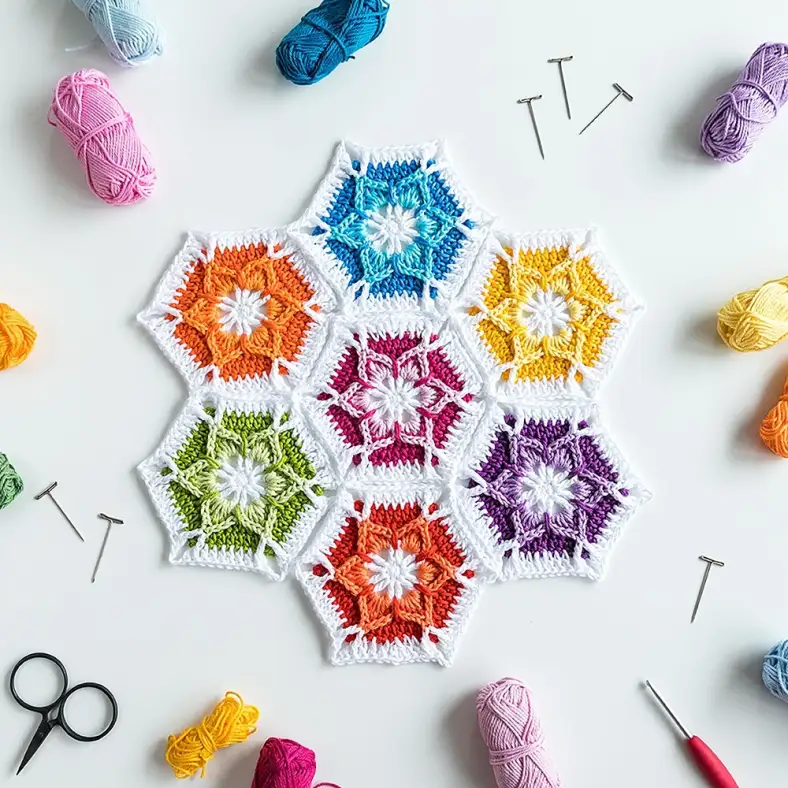
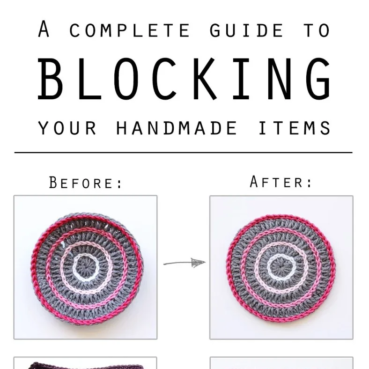
First, a little about blocking: blocking is something you do at the end of your crochet projects, after you've woven your ends in. It involves wetting the fibres and pinning them to a board to let your project dry in its final shape. This makes the stitches look neater, the edges straighter, and the finished piece softer. In general, you get a more finished look, and sometimes you can even get closer to your desired dimensions!
You can block all different types of yarn, so it doesn't really matter if you have acrylic yarn or more natural fibres. If you're interested in the theory behind it and all the general do's and don'ts, give it a read!👇
Which blocking method do I use?
Generally speaking, there are three different methods of blocking:
- Wet blocking
- Spray blocking
- Steam blocking
The post I linked above explains each method. In short, I recommend method 2. Spray blocking is a great way to get the best results for projects like large crochet blankets without using too much excess moisture. All you need is lukewarm water, a spray bottle, a blocking mat (or 22), some fabric softener and some rust-proof pins. It's simply my preferred method.
Method 1: Wet blocking (dunking your project in a basin and soaking it before pinning) can be difficult, as all the excess water weight makes a large project very heavy and bulky. This can cause your crochet or knitwork to stretch once you pick it up after soaking, making it much harder to pin neatly. This blocking method suits small items better, since the drying process won't take as long.
Method 3 (Steam blocking) is not only advanced, but also cumbersome, as you only steam small portions of your project each time. It takes ages to block large blankets on an ironing board with a garment steamer or steam iron, and you need to be very careful not to use too much heat! Spray blocking is easier on the arms and yields the same results.
Blocking a large crochet blanket
In theory, blocking is relatively easy. Clear some floor space, pin your project to blocking boards or puzzle mats, and mist it with a spray bottle until damp. Let it air dry and unpin - that's it. Unfamiliar with the technique? Read my full tutorial for spray blocking.
With large projects, the issue usually isn't in the technique. Instead, it's having enough floor space, mats and pins to let it dry. Luckily, I have a few tips to help you when space or materials are an issue.
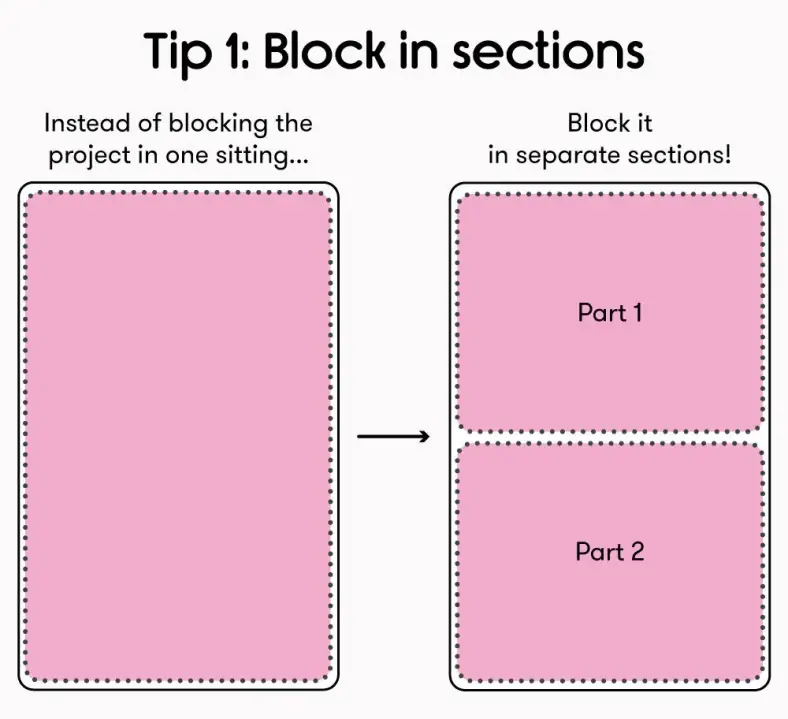
Tip 1: Block in sections
Laying it flat is an essential step in spray blocking, but sometimes you don't have enough floor space to lay larger items flat. In that case, you can block your project in parts. For example, you can block the first half of your blanket and, when that's finished, the second half.
Pin up the first half, cover the unpinned half with another blanket or cloth, and spray the pinned section with water. Once it has air-dried, repeat for the second section. It's not ideal, but it works wonders in a pinch, and you can still get very straight edges!
Tip 2: Only use mats for the edges
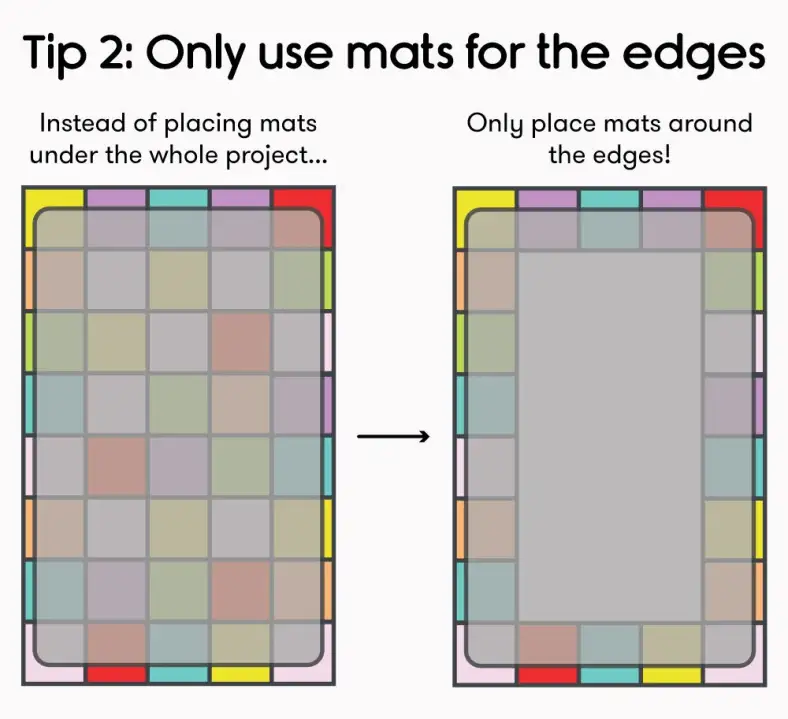
You don't want to use your yoga mat, and who wants to stack up on (expensive) blocking mats? When you can't borrow them from a friendly neighbourhood crafter, there are other ways to reduce the number of foam boards you need for this method of blocking.
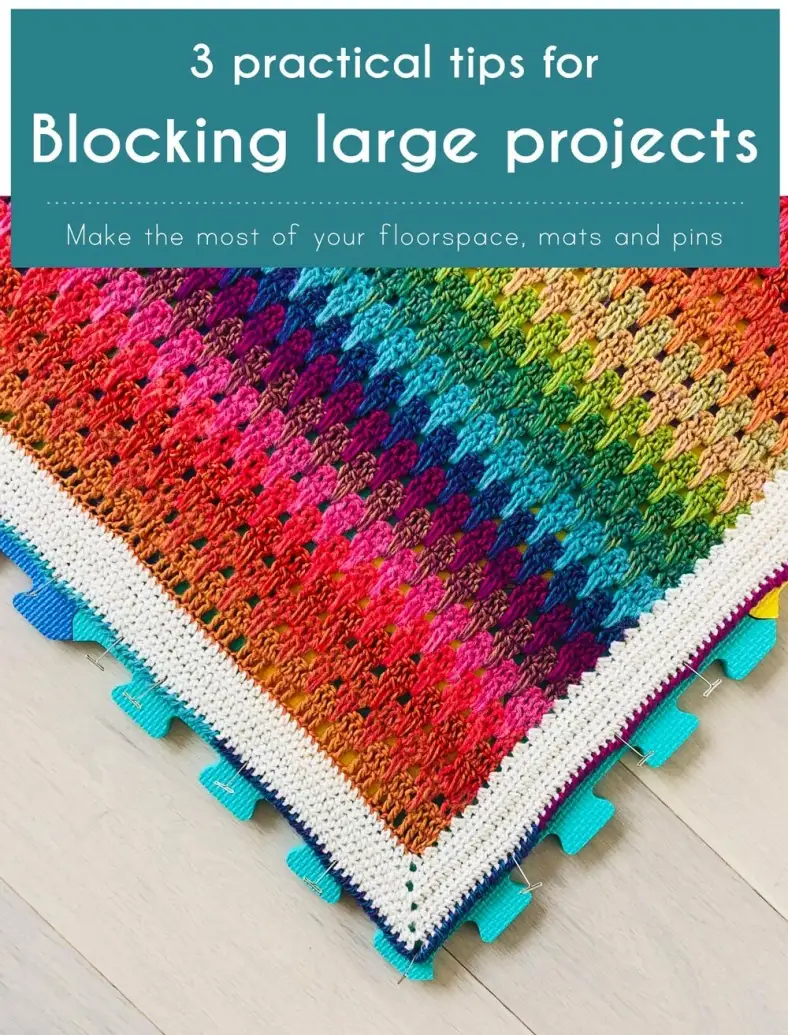
My go-to trick is to place mats only under a project's edges. Let's say you block a 150 x 180 cm (60 x 70 in) blanket. Using the standard 30 cm (12 in) blocking mats, you'd need around 5 x 8 = 40 blocking mats to cover the complete surface area.
When you use mats for the edges only, you need just 22 mats. Those mats don't have to fit together either, so you can mix and match different sets. The pins and tension in your blanket will keep them in place, and you will end up with a nicely blocked crochet blanket.
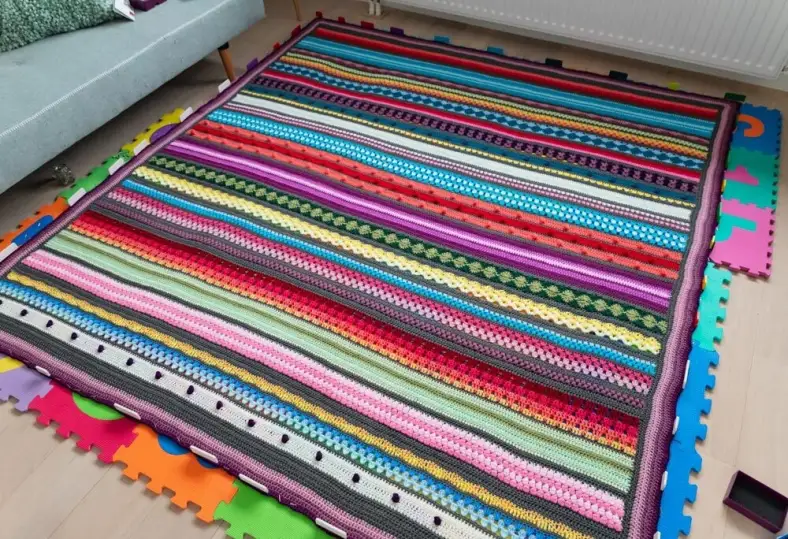
This is a snapshot of my Sampler blanket. I mixed different sets of blocking mats and puzzle mats. You can put a tarp or cloth beneath your project to keep the dampness off your floor. I didn't bother, since it evaporates pretty quickly anyway.
Tip 3: Pin efficiently
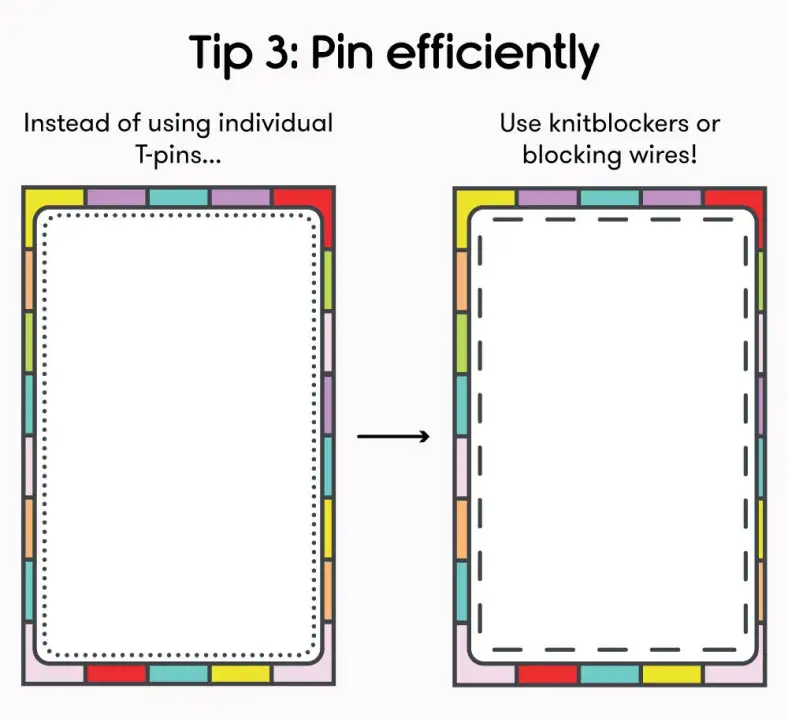
When you need to pin a big blanket, you'll need more than individual T-pins, so look for a better solution. This is where both blocking wires and knit blockers come in handy. These tools make it easy to block large sections.
I've used three sets of knit blockers for the blanket above. It's not cheap, but it's a one-off purchase, and they come in handy with each project!
Tip 4: Rustproof pins
Sadly, there is no such thing as dry blocking. Sometimes we use a little too much water, or we accidentally use cold water, and the project can take much longer to dry.
When this happens, your pins can actually start to rust. If this happens, you'd better hope you have rust-proof pins; otherwise, you will be looking for the washing instructions on your yarn label as you try to wool-wash the stains from your delicate yarn.
Tip 5: Get a proper spray bottle
One of the hard parts about spray blocking a very large blanket is, not surprisingly, that it's so large. So once you find enough space for your large crochet blanket, a thousand blocking mats, and a million rust-free pins, you may feel a sense of relief. You're almost there.
But now the actually tricky parts will begin. How will you make sure that you distribute the water evenly across the entire surface of your blanket? You need to ensure that you don't have excess moisture, but that you do make the entire blanket wet enough with lukewarm water for it to block properly. I jest about the severity, but a good spray bottle comes in handy.
If you have the opportunity, a husband or partner to do the spraying for you can also come in handy. But if you can't find a willing subject, you might as well get a spray bottle that is not too big or too small and, most of all, easy to squeeze. Some bottles are very heavy to squeeze, which will definitely tire out your hands and lower arms when you're blocking a crochet blanket.
What not to do when blocking large projects
There are also a few things you want to avoid when blocking larger pieces, when it can be helped:
- Hang it from a clothesline. The water weight, combined with the project weight, will cause sagging and stretching in the corners or around the clothesline. There's a reason every handmade item comes with instructions to dry flat!
- Soaking it through and through. A damp spray is enough. Soaking it completely will only take longer to dry and will add no other benefits.
- Pinning it on a mattress. Honestly, it will do if you really can't free up the floor space. But a mattress is quite often not firm enough to pin your project neatly. You also don't want to risk missing any pins, especially if you sleep in the same bed!
- Overstretching. This may sound like an open door, but you need to apply even tension whilst blocking large crochet blankets or other crochet pieces. If you overstretch it, you most likely won't end up with the professional finish you were going for, and while blocking can get you closer to your desired dimensions, it's no magic fix for a blanket that is way too short.
- Just start blocking. If you're unsure whether the yarn fibres you are using in your crochet item respond to blocking, start with a small swatch. That's the best way to make sure you don't ruin the entire blanket! Also keep the symmetry of the motifs in mind; you don't want to end up with a crooked blanket.
I hope these tips give you the confidence to block your next large project. If you have any more suggestions or questions, please feel free to add them to the comments!
Comments
Joyce
July 09, 2022 03:32
PJ
July 09, 2022 05:03
Kirsten
July 09, 2022 07:36
Karin
May 30, 2023 14:10
Kirsten
May 31, 2023 08:36
Jane
July 25, 2023 01:13
Kirsten
July 25, 2023 08:34
Jane
February 25, 2024 22:38
Kirsten
March 14, 2024 15:47
Jane
February 29, 2024 03:51
Kirsten
March 14, 2024 15:50
Elizabeth
October 10, 2024 17:27
Kirsten
October 10, 2024 18:00
Jane
March 14, 2024 23:00
Jackie
September 16, 2025 23:12