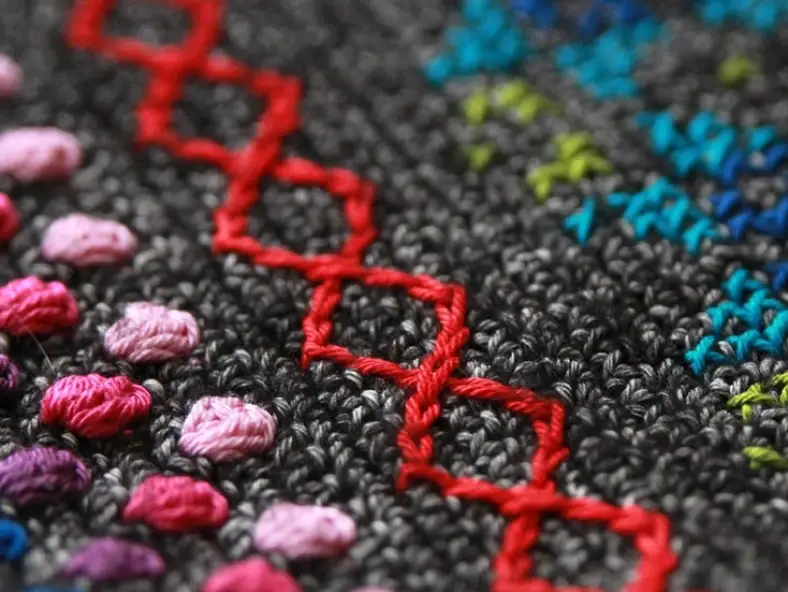
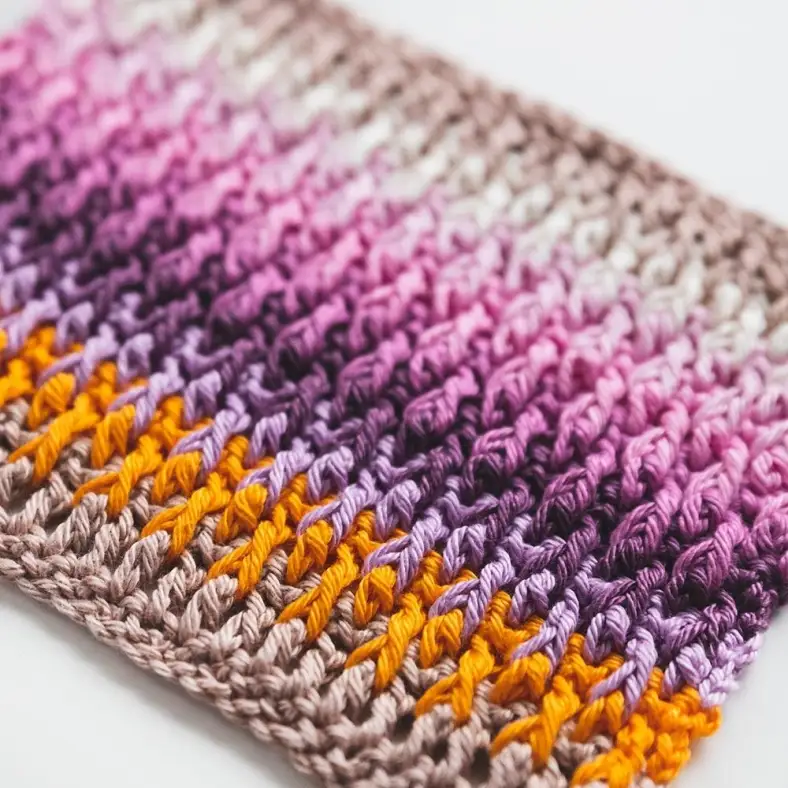
Surface crochet adds a bit of pizzazz to what would otherwise be a plain bit of crochet. Great for borders and motifs!
Which stitches can I use for surface crochet?
When you work horizontally (so you stay within one row or round), you can use any type of stitch. Single crochets, half double crochets, double crochets, it' doesn't matter. You work in the top part of the stitch, and those are all next to each other.
If you're going to work vertically or diagonally though, I would recommend using only single crochets. Single crochets are square stitches (as tall as they are wide). Other stitches, such as double crochets, are taller, which means the slip stitches you make to do surface crochet will be bigger for vertical stitches compared to horizontal ones. It just doesn't look as good, in my opinion.
Surface crochet
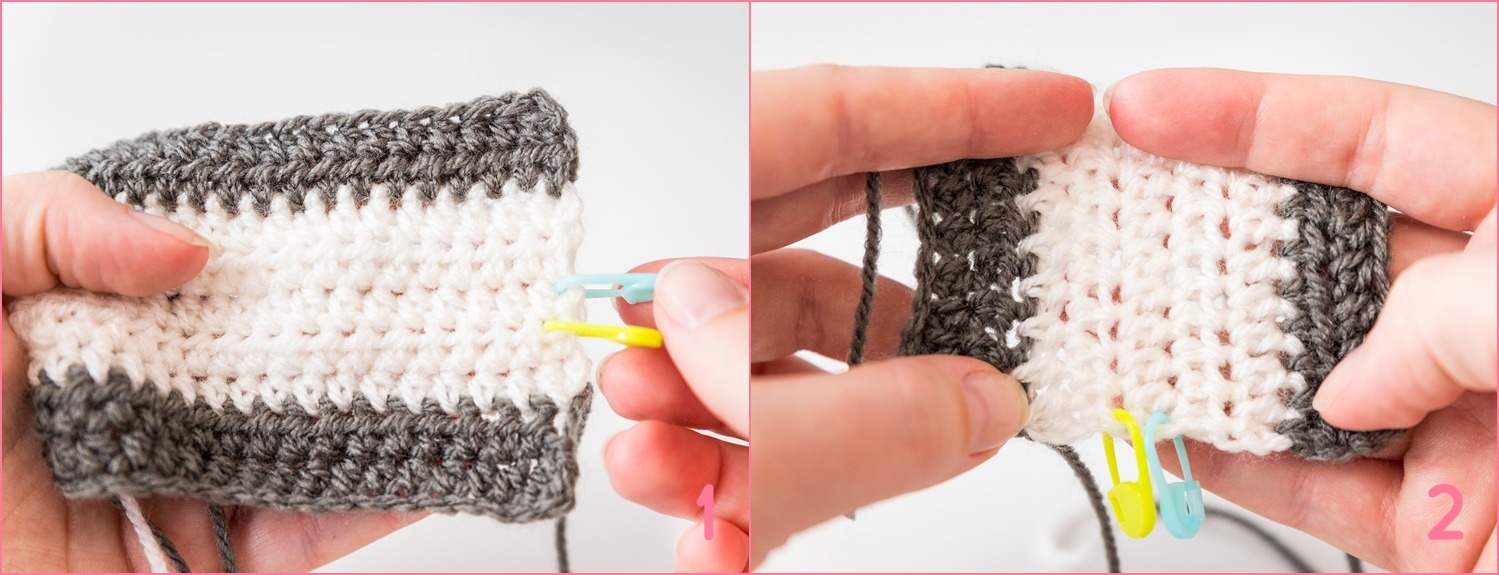
Instead of working in the top of stitches, we’ll be working over the surface of stitches. For surface crochet, it’s important to understand in which rows you’ll be working. In photo 1, I’ve marked these with a marker. You can see we will work in the top of the second row (yellow marker) and the top of the third row (blue marker). These rows form the visual centre of this section, you can check by rotating your work (photo 2).
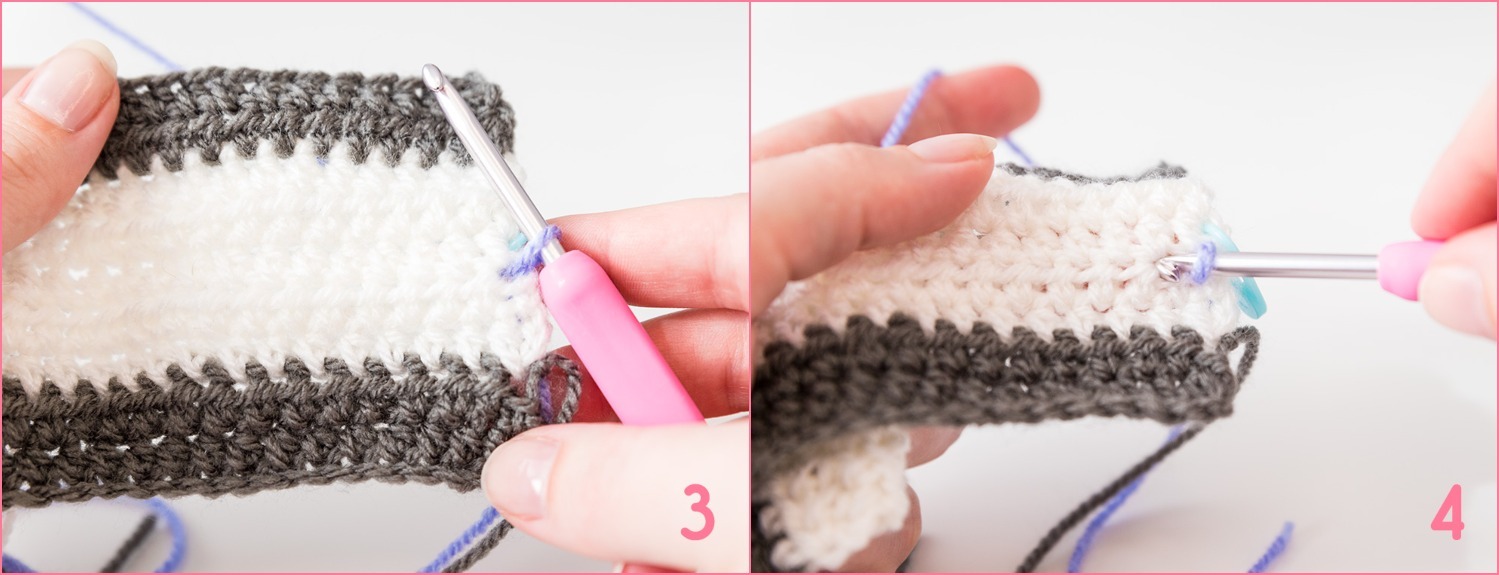
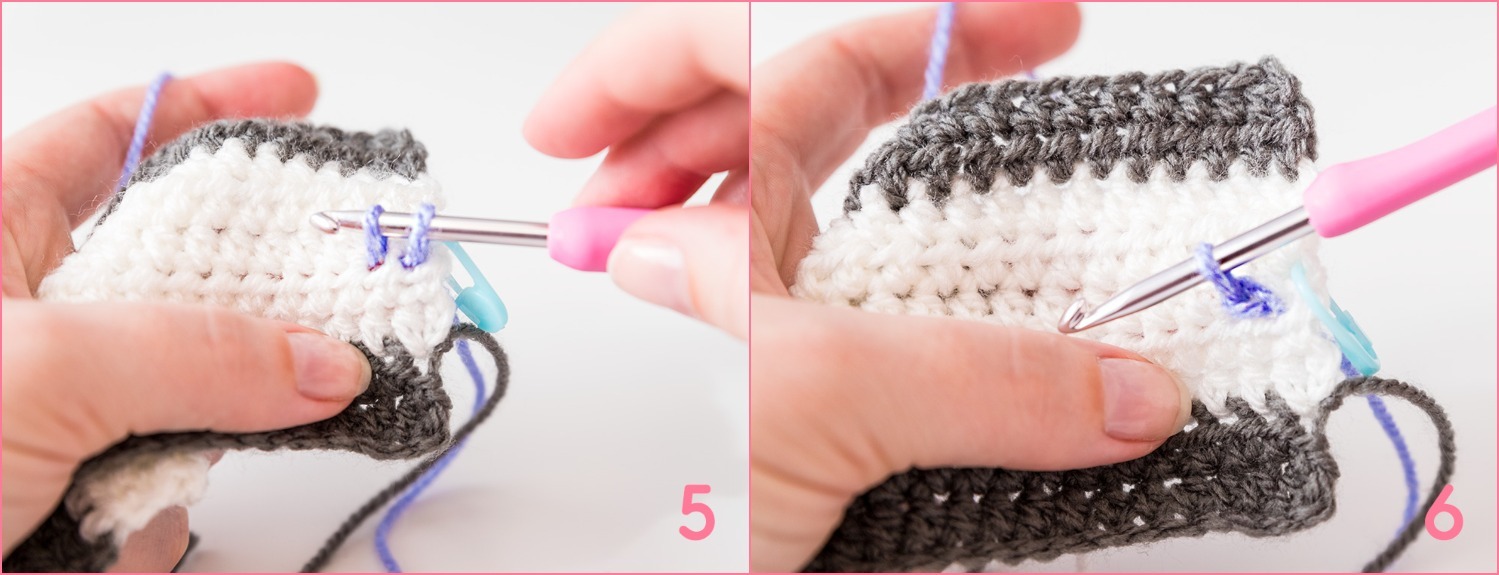
We’ll start at the yellow marker. Hold your coloured yarn at the back of your work. Insert your hook from front to back in the first stitch, and grab a loop of the coloured yarn. Pull this loop to the right side, now you’ve got a loop on your hook (photo 3). Insert your hook into the next stitch (photo 4), en pull up another loop of the coloured yarn. Now you’ve got two loops on your hook (photo 5). Pull the last loop through the second loop on hook, basically making a ss on top of your crochet (photo 6).
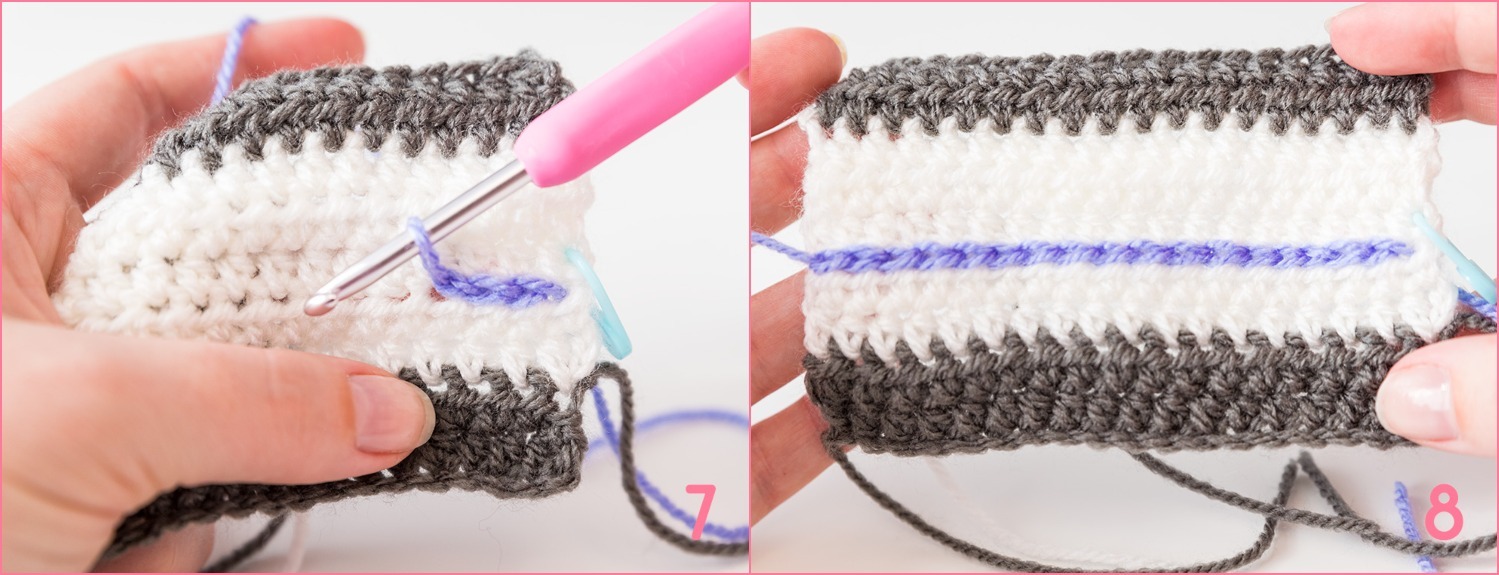
Continue like this in the next stitches, working slip stitches over your crochet (photo 7). Make sure your stitches are supple and elastic by pulling up a generous loop and not holding your yarn too tight. If this doesn’t work for you, work the surface stitches with a larger hook such as 6.0 or 6.5mm. Stretch your work lengthwise to make sure your stitches aren’t too tight. Of course, you’ll feel resistance at a certain point, but you should be able to stretch it a little bit. When in doubt: redo and use a larger hook.
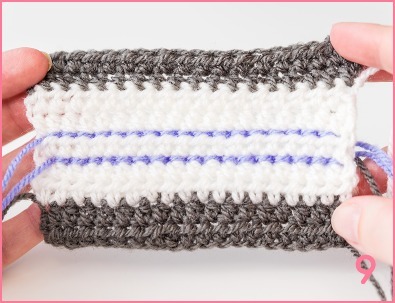
Continue like this to the end of the row. You’ve crocheted your last surface stitch when there are no more stitches left to insert your hook into. Cut yarn and pull the loose end upward through the final stitch (photo 8). After you’ve finished your second row, your backside will look like photo 9.
Diagonal surface crochet
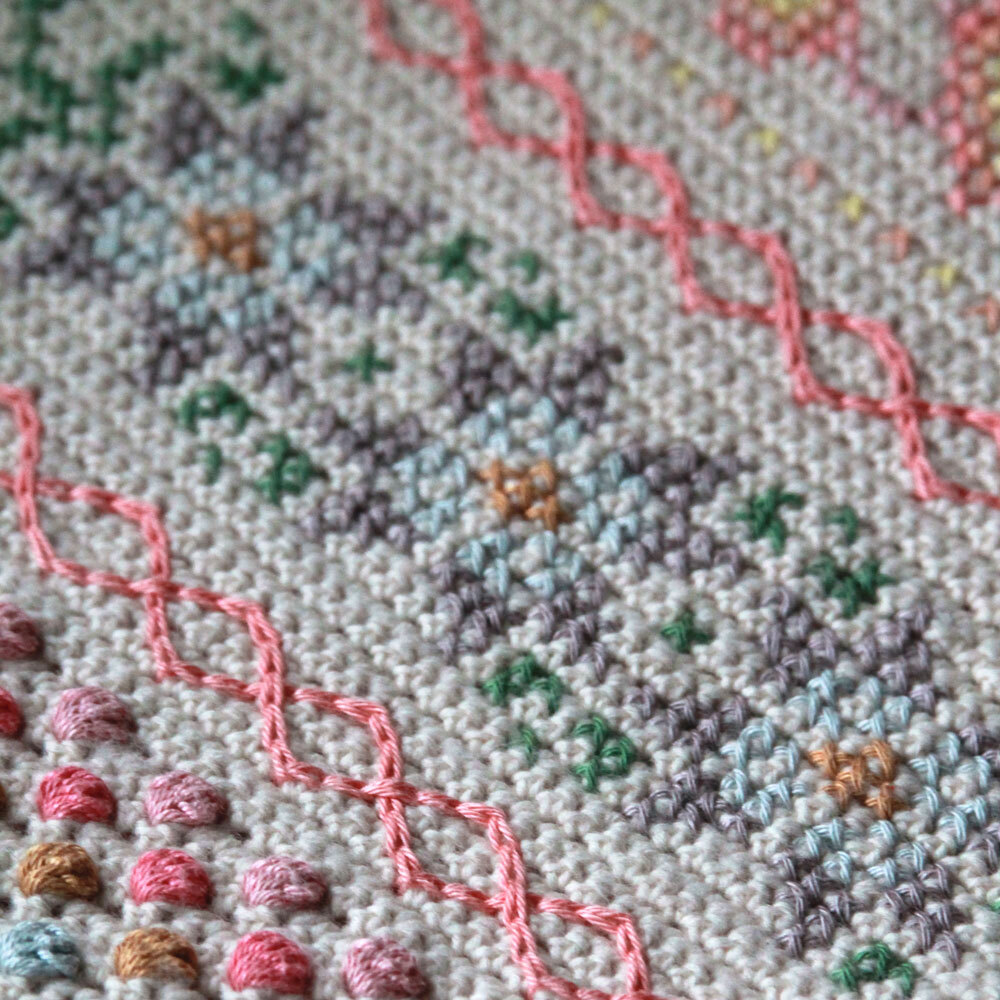
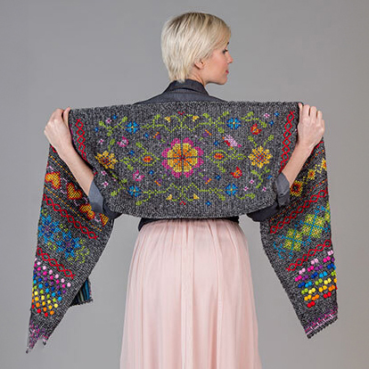
I use diagonal surface crochet in my Hygge shawl pattern. It contains extensive instructions and a video. The surface crochet there is called a 'separator' (because it separates the embroidery parts from one another).
Patterns using this stitch
More tutorials
Comments
Be the first to comment to this post!