

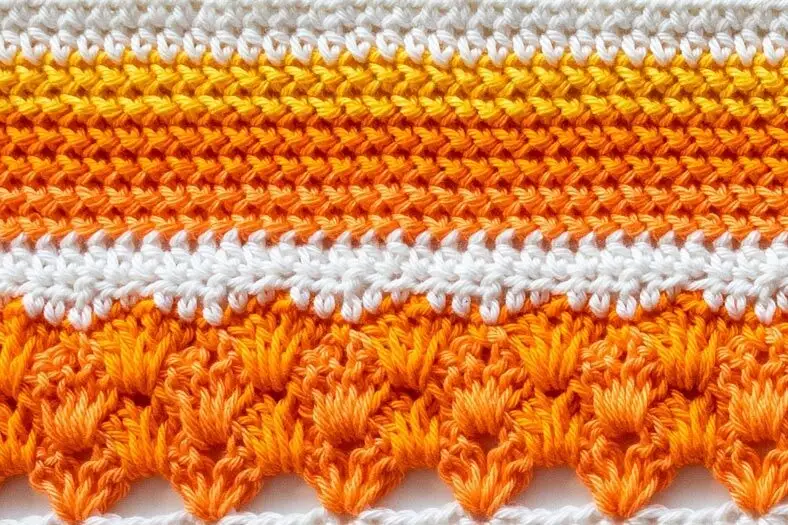
Materials and preparation
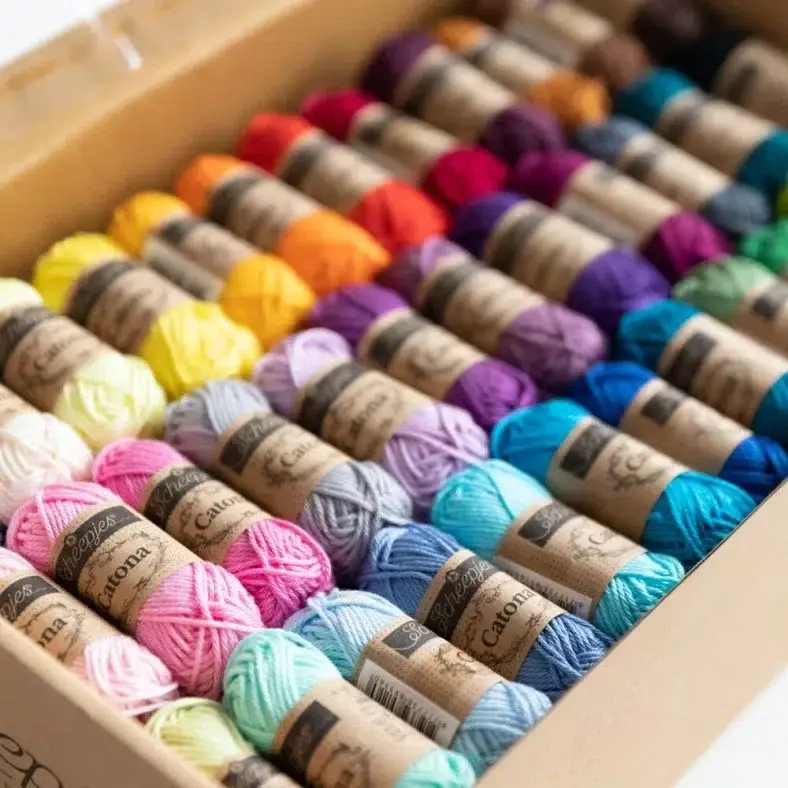
See part 1 for yarn and hook requirements.
Shop the yarn!
You can find the yarn at online retailers such as:
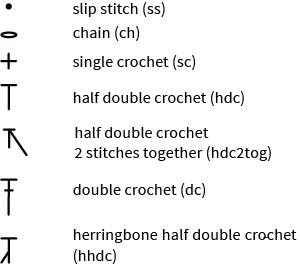
Abbreviations (US terms)
- ch
- chain
- ch-space
- chain space: the space below the chain of the previous row. The same goes for ch-2 space, ch-3 space etc.
- dc
- double crochet
- hdc
- half double crochet
- hhdc
- herringbone half double crochet: yarn over, insert hook in stitch, yarn over, pull up loop and pull directly through first loop on hook, yarn over, pull through all loops on hook
- RS
- right side
- st(s)
- stitch(es)
- ss
- slip stitch
- WS
- wrong side
Repeat formats
- *….; rep from * once/twice/3x — Crochet the instructions after * and then repeat that section a further number of times as indicated.
- (…) once/twice/3x — Crochet the instructions between brackets the total number of times indicated.
- […] — Indicates the amount of stitches at the end of a row or round.
- (…) in same st/sp — Indicates that all instructions between brackets are worked in the same stitch or space.
Notes
- Don't forget: Blue colour codes are for the Rainbow version!
Colour layout
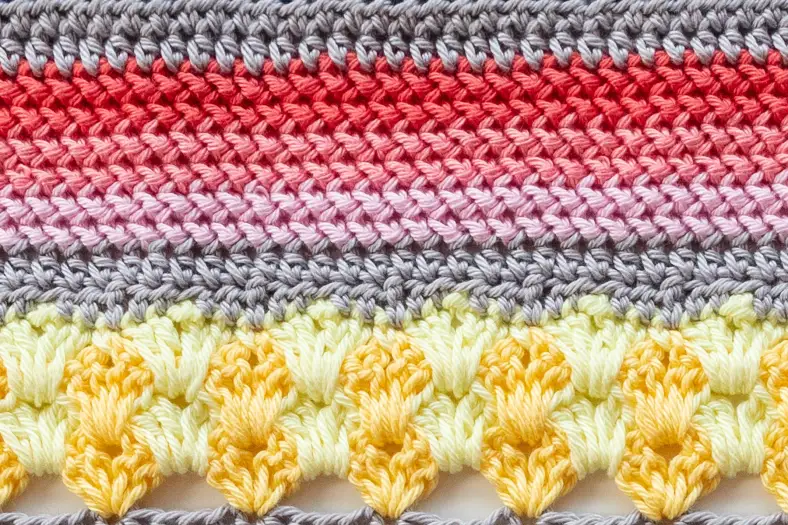
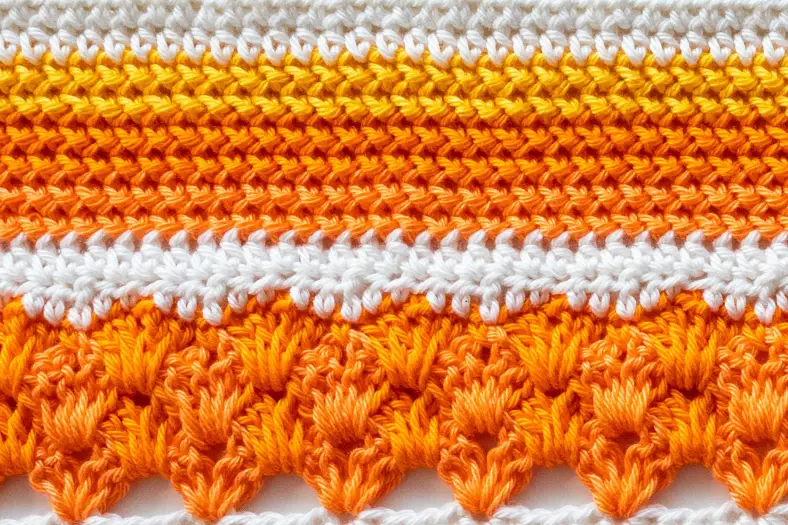
Techniques
Shell stitch
Click here for the tutorial about the shell stitch.
Herringbone stitch
Click here for the tutorial about the herringbone stitch.
Crochet pattern
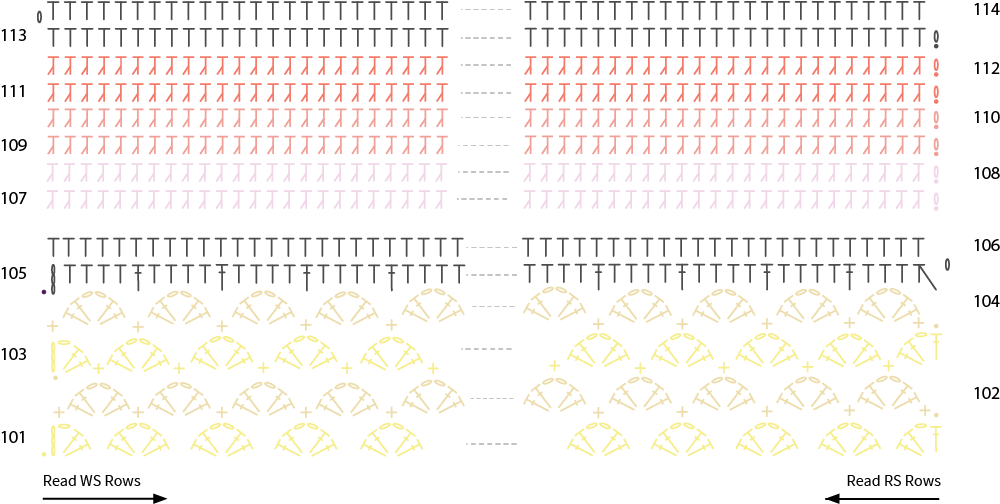
Shell Section 2 (rows 101-106)
This shell pattern is the same as the previous shell section, however, due to the use of colour it looks completely different. It’s amazing to see what a difference colour placement can make!
In a ‘standard’ shell pattern you work the shells in the single crochets (or similar stitches, this depends on the pattern) that you crochet between shells of the previous row. Doing so creates a flat and lacy pattern. If you crochet in the spaces between shells instead of in single crochets like we do, you create a denser, thicker fabric. Perfect for a blanket, not so perfect for a shawl. As you see, there are many ways to vary on a standard shell pattern.
The next row is a compensation row. You will need to compensate for the difference in height in the shells before we can resume our regular 145 hdc-rows.
The stitch markers help you find the chains in which to crochet your hdc’s in. You can remove them now.
Herringbone Section (rows 107-114)
The Herringbone stitch is a stitch I found quite early in my crochet journey. It’s an adaptation of the regular hdc. By changing the way you work your loops you create a diagonal loop that resembles the traditional (knit) herringbone stitch. One of the ‘downsides’ of this stitch is that it doesn’t work in rows, so we’ll have to start at the RS for each row in this section.
The herringbone stitch is quite rough for a crocheted stitch. It’s a great stitch for protective cases, bathmats, anything that needs to be able to withstand a bit of wear and tear really.
Don’t forget that you are starting on the RS again!
Don’t forget to double-check that your herringbone stitch is showing on the right side of your blanket. It’s the side with the rougher (and prettier) texture. Also, please make sure that you’re actually joining your new row into the first hhdc. These stitches, by nature, lean to the left, so be careful that you’re not accidentally joining in the ch1 you started your row with (and subsequently, end up with 146 hhdc).
Continue with part 9 of the pattern.
Diagrams
You might also like
Comments
Be the first to comment to this post!