Materials and preparation
See part 1 for yarn and hook requirements.
Shop the yarn!
You can find Scheepjes Catona via your local Scheepjes retailer or order online in these webshops:
Abbreviations (US terms)
- begin-puff stitch
- ch2, (yarn over, insert hook in stitch, yarn over, pull up loop) 3x in the same stitch, yarn over, pull through all loops on hook
- dc
- double crochet
- ch
- chain
- hdc
- half double crochet
- puff stitch
- (yarn over, insert hook in stitch, yarn over, pull up loop) 4x in the same stitch, yarn over, pull through all loops on hook
- RS
- Right side
- sc
- single crochet
- ss
- slip stitch
- st(s)
- stitch(es)
- WS
- Wrong side
Repeat formats
- *….; rep from * once/twice/3x — Crochet the instructions after * and then repeat that section a further number of times as indicated.
- (…) once/twice/3x — Crochet the instructions between brackets the total number of times indicated.
- […] — Indicates the amount of stitches at the end of a row or round.
- (…) in same st/sp — Indicates that all instructions between brackets are worked in the same stitch or space.
Notes
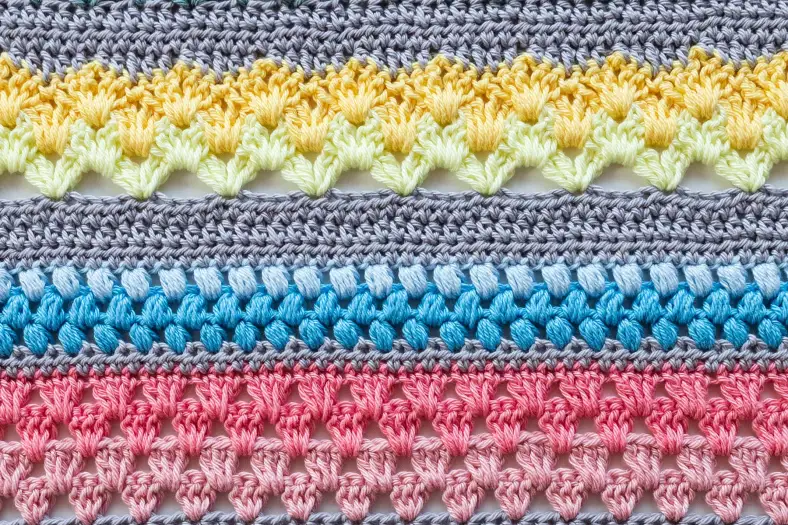
- Don't forget: Blue colour codes are for the Rainbow version!
Colour layout
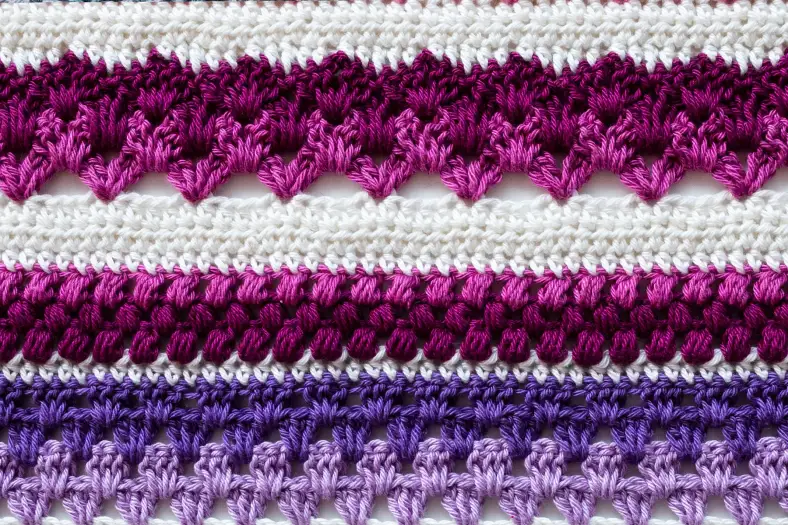
Techniques
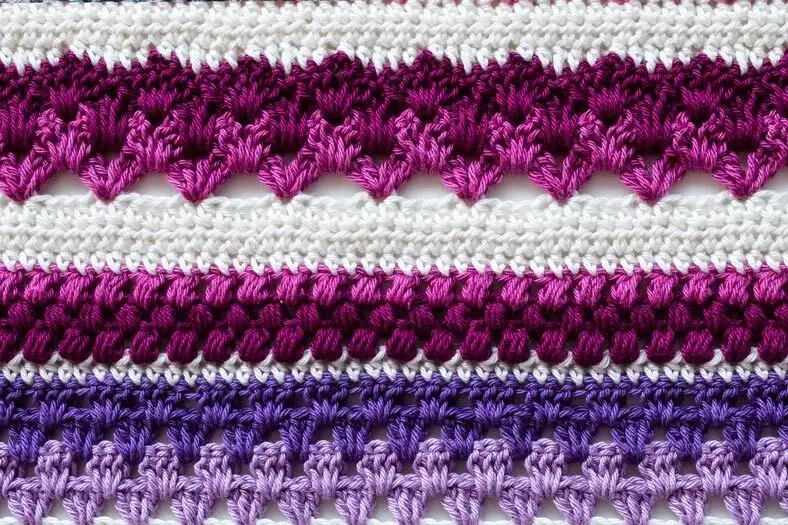
Granny Clusters
Click here for the tutorial about granny clusters.
Puff Stitches
Click here for the tutorial about thepuff stitch.
Shell Stitch
Click here for the tutorial about the shell stitch.
Crochet pattern
Granny Cluster Section 2 (rows 41-45)
We’ll be repeating the instructions for the previous Granny Clusters here, only we’re starting from the WS instead of the RS and will not change colours as often. I’ve written the complete instructions below. But rest assured, if you’ve done section 1 this will be a breeze!
That last hdc2tog is necessary to reduce our stitch count from 146 back to 145 again!
Puff Stitch section 2 (rows 46-51)
You’ve done these stitches before, aren’t you loving them? The texture these little Puff stitches create is just divine. I like using them as a contrast row, or as an edging. They’re not too big and add just little more visual flair than a regular edging.
For full measure, I’ve written down the instructions for the puff stitch rows below again.
If you look closely at your stitches, you can see that the chains you’re crocheting look like they’re laying on top of the puff stitches!
Shell section 1 (rows 52-58)
We’re going to be crocheting shells in this section. There are many different types of shells. What they all have in common is that they’re worked from one stitch, fanning out (hence the name ‘shell’). They’re a classic stitch. My great-grandma had multiple handmade shawls made out of shells.
I found that tension makes a difference for the next few rows. If your tension is loose, your shell row might start to wiggle and fan out a little bit. You can tell because if you put your blanket on a flat surface and smooth it out with your hands, the shell row will not lay flat. That’s because there’s too much yarn to occupy the space for these rows. If your tension is tight, you will find that the method below will cause your blanket to pull inwards. That’s because there’s not enough yarn for your rows to stretch comfortably. So keep an eye on your tension and get your shells to lie flat after Row 61. Trust me; you’d rather only pull out two rows and do them over, instead of regretting not fixing it for the remainder of the CAL. Part of the learning process is getting to know your tension and make adaptations based on that.
The next row is a compensation row. You will need to compensate for the difference in height in the shells before we can resume our regular 145 hdc-rows.
The stitch markers placed in the last row of the Shells will help you identify the right chain to crochet in. Remove marker.
Continue with part 5 of the pattern.
Diagrams
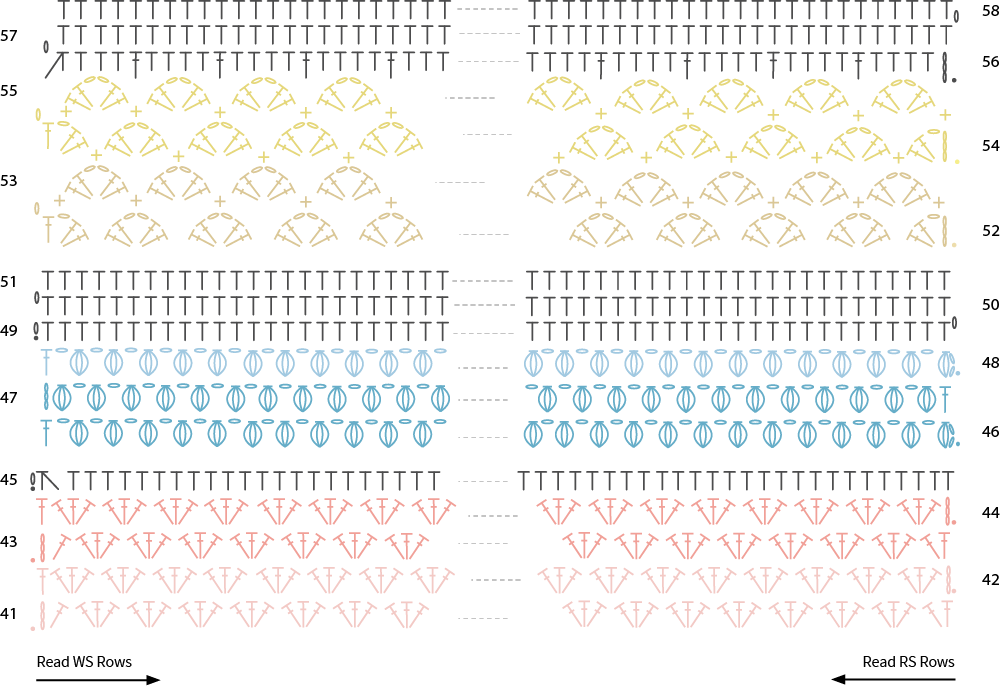
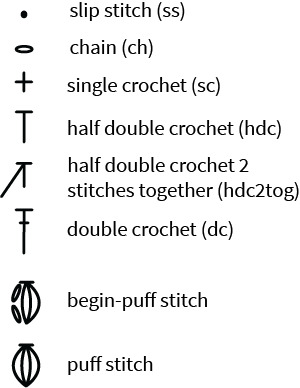
You might also like
Comments
Be the first to comment to this post!